
Enhancing our fears of the unknown: Camera angles and perspective in horror games
By Bjørk Myklebust-Mogen
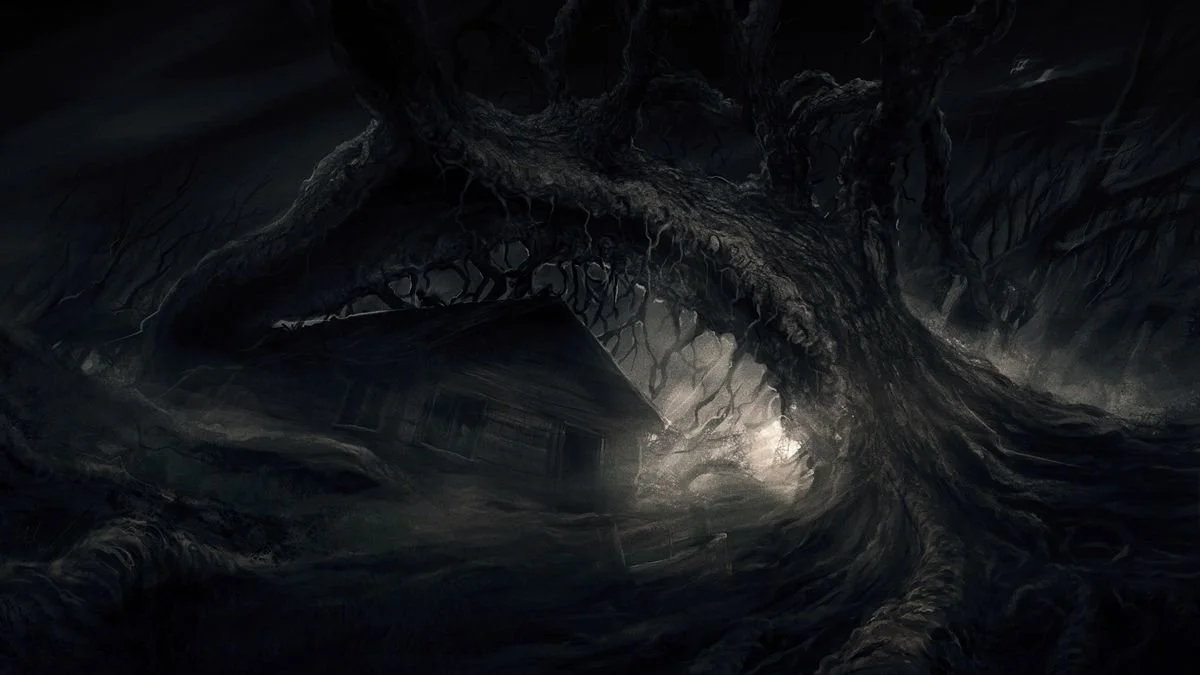
Image: Darkwood (2014), Acid Wizard Studio
It’s easy to forget the existence of the camera when you’re playing games, isn’t it? Its purpose, it seems, is to simply disappear out of sight and out of mind. The camera is just the way we experience the world, and yet it is also the way we experience the world. Without a camera, there’d be no game — no visual game, at least — yet year after year the camera sinks further into the background. Gone are the days of Resident Evil’s fixed camera angles and Doomguy’s inability to look up, and as such all games nowadays, especially horror titles, all opt for more or less the same camera solutions. Obviously there are differences in perspective, but within those perspectives the ways in which the camera is controlled and placed are largely homogenous. It seems we’ve all collectively agreed for the past 20 years to place a third person camera over the shoulder or right behind the character. Is this necessary, though? Does the camera and the perspective it conveys have to be passive and compliant, or can it be used as a tool to benefit the game, and horror in particular?
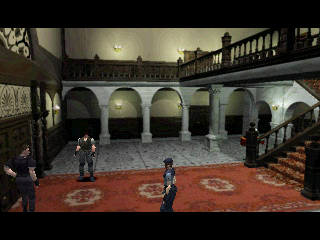
Image: Resident Evil 1 (1996), Capcom
Resident Evil’s (1996) particular choice of camera, that being fixed angles portraying one screen at a time, is itself a result of hardware limitations. The game is the first in the now well-established franchise in which you shoot zombies, run around a huge spooky mansion, try to cram a million things in your inventory at once, and solve lots of puzzles of varying quality, and as such the developers had to get a bit creative with how they realized this vision; without blowing the Playstation 1 to bits. To do this they opted to use pre-rendered backgrounds. These were layered below the characters and enemies to give the illusion of 3D, without having to render anything in real time. In order to switch screens, the player simply walks to the edge of the screen, before a hard-cut to the next pre-rendered background.
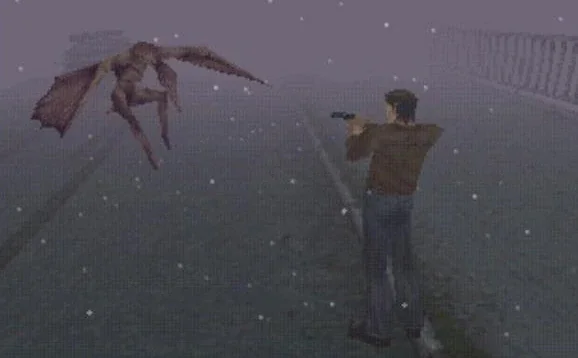
Image: Silent Hill 1 (1999), Konami
The downside with pre-rendered backgrounds, however, is that the faux 3D effect only works from the angle it was created, meaning the player can’t be free to move the camera on their own or it would ruin the illusion. It is maybe a bit ironic, then, that this faux 3D mansion has me just as tense as any modern Resident Evil I’ve played. And I think this system has helped with the overall vision of the game, despite being born of technical limitations. In an interview with Wildstorm magazine in 1998, director of Resident Evil 1 Shinji Mikami, when asked about his goals with the game, stated that «The player had to feel scared, as if something was waiting for him around the next corner.» And that is precisely what I end up feeling when wandering the jump-cutting halls of RE1. Every transition to the next screen is rough and brutal, turning each new room into its own mini jumpscare. Even though there’s really nothing there most of the time, you get the feeling as if there could be, and when there actually is it’s all the more terrifying.
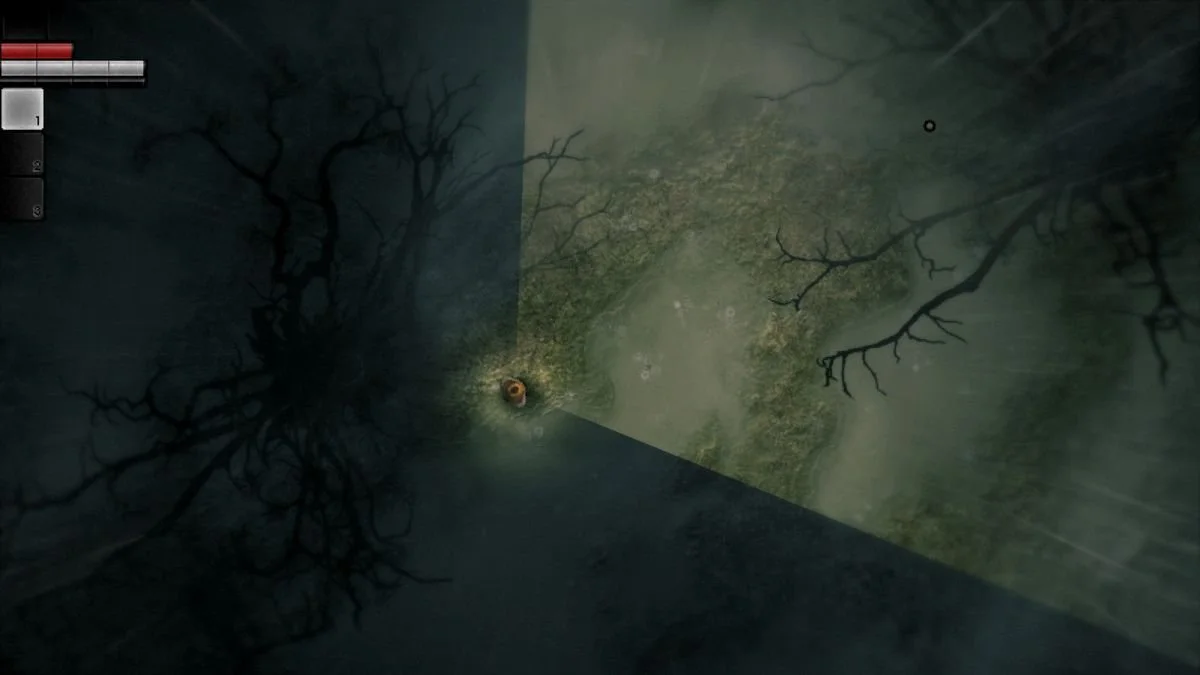
Image: Darkwood (2014), Acid Wizard Studio
«Sure, Bjørk», you might be thinking now.»
«That’s all well and good, but monsters could just be hiding around a corner or behind a door in games where you do have control of the camera. Wouldn’t that be just as scary, without the annoyance of tank controls?» And sure, however, there’s one key thing I haven’t discussed yet: scale. Think of any game that uses the standard playercentered camera and there’s one key similarity: the player is the most important presence on-screen. Whether it be third- or first-person your player character is always the most vital entity in view at any time. This is an understandable sideeffect and a necessary trade-off for games which need the player character to be clearly readable and not have them be overshadowed by anything, but it does also compromise the importance of everything else on-screen. The player is at all times the subject, perfectly framed by the camera. With a fixed camera on the other hand, whenever you leave the center of the frame the camera remains, leaving you to go off on your own, your character shrinking smaller and smaller in size the further away you get, and when a zombie, dog or zombie-dog inevitably peeks out from behind you it instantly becomes the biggest, most demanding thing in view. Not only do you feel as though anything could be lurking around the next corner, but whatever that thing is, the game’s perspective makes sure to let you know how big of a threat it is, and how you’re ultimately not any more important.
Maybe it’s not the feeling of constant unimportance that makes for great horror. I think if that’s the only thing you felt at all times the game would be more of a demotivating slog; a valid experience in its own right - look up Pathologic for a great example - but not necessarily a horror staple. Maybe instead the constantly changing size and position of your character further destabilizes and uproots your expectations. Because sometimes you’ll walk into a room and be hit with a close-up of your character’s face, taking up far more screen space than any monster ever does, the significance of your character reminding you just who you’re playing as. The protagonist, that is. Thus, when you’re reduced to just a speck in the back of a room shooting at something in the foreground where you should be - would be in any other game - the contrast in size makes you realize just how insignificant you are in that moment, despite your perceived importance as the main character.